Barstool SVG Bundle
A Designer’s First Glance: Clean, Nostalgic, and Surprisingly Versatile
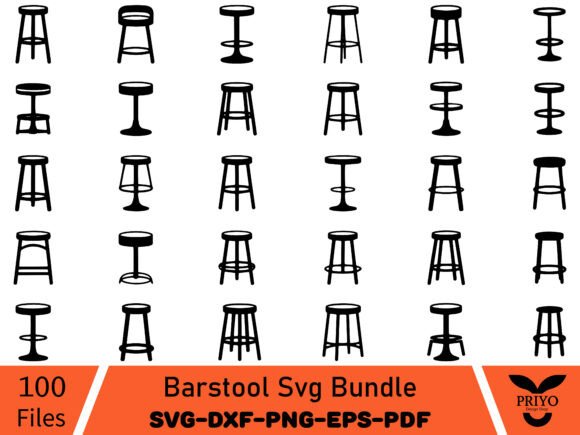
Opening the Barstool SVG Bundle felt like flipping through a well-curated sketchbook—no flash, no clutter, just confident line work and balanced negative space. As an embroidery designer who’s stitched everything from nursery wall art to boutique aprons, I immediately noticed how the illustrations lean into warm, mid-century charm without leaning too hard on cliché. The barstools are stylized but recognizable: tapered legs, curved seats, subtle armrests—all drawn with rhythm and restraint. It’s not a hyper-detailed vector; it’s a designer’s vector—built for translation into thread, not just screen display. That distinction matters. What reads as simple on screen becomes expressive in satin stitch, legible in fill stitch, and charmingly imperfect in running-stitch outlines.
Real-World Test: Embroidering a Linen Kitchen Towel for a Local Café
Last week, I used Barstool SVG Bundle to create a limited-run embroidered kitchen towel for a neighborhood coffee shop. They wanted something that nodded to their retro diner aesthetic but wouldn’t overwhelm the fabric or feel “clip-art-y” on a handmade product. I chose the medium-sized barstool (no text, just the icon) and digitized it at 3.2" wide with moderate stitch density—light enough for linen’s natural texture, dense enough to hold shape after repeated washing. The result? Crisp leg definition, soft seat curvature, and zero float or puckering—even on the slightly uneven weave. Customers noticed it instantly: “That’s *us*,” one barista said, pointing to the stool’s clean silhouette. That’s the quiet power of this bundle: it supports storytelling without shouting.
Where It Shines—and Where to Pause
The Barstool SVG Bundle works beautifully across several high-demand embroidery categories:
- Custom apparel: On cotton sweatshirts and structured tote bags, the design holds its personality—neither too busy nor too sparse. It reads well at 2.5–4" wide, making it ideal for left-chest placements or back-of-cap accents.
- Baby and nursery items: Paired with soft pastel thread on organic cotton onesies or muslin pillow covers, the barstool takes on gentle, whimsical warmth—perfect for a “tiny diner” baby shower theme.
- Patches and aprons: As an appliqué design, it layers cleanly. The open shapes allow for easy background fabric peek-through, adding depth without extra stitching.
- Holiday and gift embroidery: On tea towels or ceramic mug wraps (via printable mockups), it reads as thoughtful—not generic. Especially strong for Father’s Day, housewarming, or small-shop branding.
But—and this is where experience kicks in—there are moments to proceed with care:
- Small hoop sizes (<3"): Some versions include tiny details like footrest lines or seat stitching. These may vanish or distort below 2". Always preview in your embroidery software and simplify if needed.
- Textured or stretchy fabrics: On terry cloth towels or ribbed knit caps, use cutaway stabilizer + basting stitches. The design’s clean edges demand stability—especially where legs meet seat.
- Dark or heavily printed backgrounds: Since the SVG files are outline-based (not pre-colored), test thread contrast early. A light ecru satin stitch on navy denim reads elegantly; neon yellow on black can feel jarring unless intentional.
- Curved surfaces (like cap fronts): The barstool’s horizontal orientation means it stitches best on flat or gently contoured areas. Avoid placing it directly over deep crown curves unless you’ve tested hooping and tension first.
What This Bundle Says About Your Finished Product
Using Barstool SVG Bundle doesn’t just add decoration—it quietly elevates perception. On an Etsy listing for personalized aprons, it signals attention to cohesive, lifestyle-aligned design—not just “a logo slapped on fabric.” For craft fair shoppers, it reads as curated, not mass-produced. And for commercial embroidery clients? It suggests you understand visual hierarchy and brand tone. I’ve watched customers pause longer at products featuring these illustrations—not because they’re flashy, but because they feel considered. That builds trust faster than any sales copy.
Practical Designer Notes Before You Stitch
Before cutting fabric or loading your machine:
- Test the embroidery file on scrap fabric matching your final project’s weight and stretch.
- Check stitch density visually—dense fills on lightweight cotton can cause stiffness; light runs on thick fleece may lack definition.
- Confirm hoop size compatibility. If you’re using a 4x4 hoop, avoid versions with wide horizontal spans unless you plan to split or resize.
- Inspect corners and inner curves closely—SVG-to-embroidery conversion can sometimes soften tight angles. Adjust pull compensation if needed.
- Run black-and-white mockups. Does the shape retain legibility when stripped of color? It should.
- Compare performance on light vs. dark fabric swatches—thread sheen and coverage shift dramatically.
- Use appropriate stabilizer: tear-away for stable wovens, cutaway for knits or linens, and fusible for delicate layers like baby blankets.
- Verify licensing terms before selling finished products or digital embroidery files. The description notes commercial use potential, but always double-check scope—especially for resale on platforms like Etsy or Amazon Handmade.
Final Thought: A Quiet Workhorse, Not a Showstopper
Barstool SVG Bundle won’t dominate your portfolio with technical fireworks—but that’s its strength. It’s the kind of Illustrations asset that supports your voice instead of competing with it. Whether you’re building a craft business around cozy home goods, launching a line of custom embroidered apparel, or designing holiday gifts for repeat clients, this bundle delivers consistent, adaptable, and genuinely likable design assets. It respects the craft. It respects the customer. And most importantly, it respects the time you spend choosing every stitch.