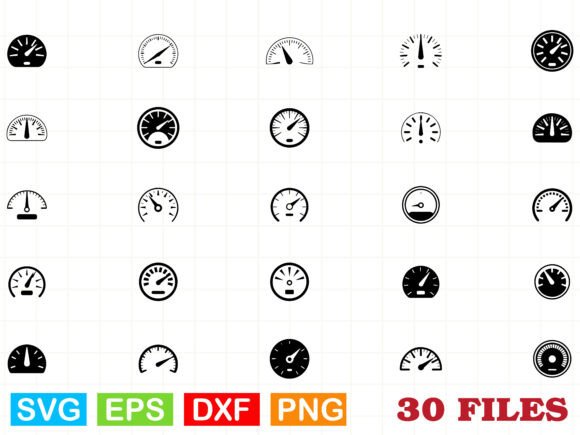
Speedometer SVG Bundle
As someone who’s stitched thousands of designs across apparel, home goods, and personalized gifts—everything from baby onesies to boutique aprons—I opened the Speedometer SVG Bundle expecting something playful but functional. What I found wasn’t just a novelty graphic—it was a surprisingly versatile illustration with quiet confidence. It reads as retro-modern: clean circular layout, balanced needle-and-dial symmetry, subtle tick marks, and just enough detail to feel intentional without veering into visual noise. It doesn’t scream “racing” or “mechanic”—it whispers “curated curiosity,” which makes it unexpectedly adaptable for embroidery.
What This Design Actually Wants to Be on Fabric
I tested the Speedometer SVG Bundle as a centerpiece on a medium-weight cotton tote bag—intended for a local coffee shop’s staff gift line. Right away, its scale and proportion worked: the outer ring held strong at 3.8 inches, the needle landed crisply, and the numbers stayed legible without needing aggressive digitizing tweaks. That tells me this isn’t just a print-ready graphic—it carries embroidery intention in its bones. The design naturally suits sweatshirt embroidery (left chest or sleeve), embroidered patch applications, and even nursery decor—think a framed pillow cover for a gear-loving dad or a minimalist baby cap. Its charm lies in restraint: no excessive gradients, no tiny serifs, no overlapping layers that would collapse under fill stitch. That’s rare in Illustrations meant for dual use (print + stitch).
Where It Shines—and Where You’ll Need to Pause
The Speedometer SVG Bundle excels on stable, medium-to-heavy fabrics: canvas totes, twill aprons, fleece-lined sweatshirts, and tea towels. On those surfaces, the outer dial edge holds definition, the needle reads as a confident satin stitch accent, and the inner markings translate cleanly—even at modest stitch density. It’s also a smart pick for holiday embroidery: imagine it stitched in navy and gold thread on a linen kitchen towel for a mechanic’s Christmas gift, or in soft grey and blush on a baby blanket with “First Milestone” embroidered below.
But—and this is where real-world experience matters—don’t reach for it blindly on stretchy knits, thin voile, or tightly curved caps without testing. The circular geometry demands consistent tension; on jersey or ribbed fabric, the outer ring can pucker if stabilizer choice or hooping isn’t precise. Likewise, avoid placing it near seams, darts, or high-flex zones (like elbow areas on sleeves) unless you’re willing to adjust underlay or reduce density manually. And while the numbers are clear at 4+ inches, they’ll blur on anything under 2.5 inches—so skip it for tiny hat brims or baby sock cuffs unless you’re re-digitizing.
How It Shapes Perception—Before and After Stitching
Customers don’t buy stitches—they buy meaning, cohesion, and care. When the Speedometer SVG Bundle lands well on a finished product, it quietly elevates perceived value. A custom embroidered tote with this design feels considered—not trendy, not throwaway. It signals that the maker understood proportion, contrast, and context. That builds trust, especially for Etsy sellers and small shop owners curating handmade product lines. On the flip side, if stitched poorly—say, with low-contrast thread on dark fabric or without proper tear-away stabilizer—the needle can vanish, the dial can look muddy, and the whole piece reads as rushed. That’s not the design’s fault—but it *is* your responsibility as the embroiderer to honor its structure.
Practical Notes Every Embroidery Designer Should Run Through
- Always test on scrap fabric first—especially if using textured weaves or blending thread colors.
- Check thread color contrast before stitching: light grey on heather charcoal? Might need a white underlay. Deep red on black denim? Confirm visibility at arm’s length.
- Review stitch density in your embroidery software—this design shouldn’t need heavy fills, but dense center clusters could cause stiffness on lightweight garments.
- Confirm hoop size compatibility before loading: does your machine handle the full diameter comfortably, or will you need to split and realign?
- Inspect small details in preview mode: are the tick marks distinct? Does the needle taper cleanly? If not, minor cleanup may be needed.
- Test in black-and-white mockups—not just color—to assess tonal balance and silhouette strength.
- Compare light and dark fabric backgrounds in your design workflow—some SVGs lose hierarchy when inverted.
- Use appropriate stabilizer: cut-away for knits, tear-away for stable wovens, and fusible for lightweight linens.
- Verify licensing before selling finished items or bundling the Speedometer SVG Bundle into digital embroidery file collections—commercial use rights aren’t implied by listing alone.
Who This Design Truly Serves—Beyond the Obvious
Yes, it works for automotive-themed merchandise. But more interestingly, the Speedometer SVG Bundle fits craft businesses building cohesive branding—think a small-batch candle maker using it as a subtle icon on packaging tape or a ceramicist stitching it onto apron pockets alongside hand-thrown mug logos. It’s also quietly effective for personalized gifts where theme meets subtlety: a graduation present for an engineering student, a retirement gift for a longtime fleet manager, or even a whimsical addition to a child’s “future dream job” onesie collection. As a Graphics asset, it bridges illustration and function—no extra clipart clutter, no forced narrative. Just clean, confident form.
Final Thought: A Design That Respects Your Time and Craft
In a sea of over-digitized, overly saturated embroidery files, the Speedometer SVG Bundle stands out by doing less—and doing it well. It doesn’t demand special treatment, but it rewards thoughtful execution. It won’t carry a weak concept, but it will elevate a strong one. For embroidery designers, Etsy sellers, and creative entrepreneurs building real handmade product lines, that kind of reliability isn’t just convenient—it’s professional infrastructure. Use it where clarity matters, where craftsmanship shows, and where your customer notices the difference—even if they can’t quite name why.